

Rat guide · Home & garden
How to Get Rid of Rats
To get rid of rats, cut off their food, then place poison bait in a lockable bait station or set heavy duty rat traps along the walls and fences they run beside. Check them regularly, remove dead rats and leftover bait, then seal gaps of 15mm or more with wire wool so new rats can't get in.
Updated November 2026 · 10 min read

On this page
How do I know I have rats?
The rat in UK homes and gardens is almost always the brown rat. Rats are mostly active at night, so you'll usually find the signs before you see one:
Droppings
Dark, capsule-shaped and tapered at both ends, around 1 to 2cm long. Fresh ones are soft and moist.
Runs
Rats use the same routes every night, leaving flattened trails through grass and along walls and fences.
Burrows
Holes about the size of a tennis ball, often by decking, sheds, compost bins and in banks of earth.
Gnawing
Chewed wood, plastic, bin lids, cables and food packaging.
Smears and prints
Dark greasy marks along skirting boards and pipes, and footprints or tail swipes on dusty or muddy surfaces.
Noises
Scratching or scurrying in walls, under floors or in the loft at night.
One rat seen once may just be passing through, as rats travel a long way looking for food. Seeing rats often, such as daily or a couple of times a week, points to a bigger problem.
Is it rats or mice?
It matters, because rats and mice behave differently and need different traps. If the signs point to mice, use our guide on how to get rid of mice.
| Sign | Rats | Mice |
|---|---|---|
| Droppings | Capsule-shaped, around 1 to 2cm | Like grains of rice, 3 to 6mm |
| Size | Body 20 to 27cm, plus tail | Much smaller |
| Gap they fit through | 15mm | The width of a pencil |
| New objects | Wary; may avoid traps and bait boxes at first | Don't usually fear new objects |
| Where you find them | Gardens, drains, sheds, under floors, lofts | Kitchens, cupboards, walls, lofts, cars |
How to get rid of rats: 7 steps
-
Find where they are active
Look for fresh droppings, runs, smears and burrows. Rats move along edges, so check along walls, fences, the back of sheds, under decking and around pipes. These are the places your traps and bait go.

Fresh rat droppings and greasy smear marks along a wall. Signs like these show the routes rats use every night. -
Cut off food and water
Put rubbish in bins with tight lids, stop putting bird food on the ground, and store pet food and bird seed in sealed tins. Cover water butts. With less food around, rats are far more likely to take your bait or trap.
-
Leave their hiding places alone for now
Don't clear wood piles, clutter or overgrown corners yet. The Campaign for Responsible Rodenticide Use (CRRU) advises against clearing a site before treatment, as it disturbs rats and makes them less likely to take bait. Clear up once the rats have gone.
-
Place bait stations or traps on their runs
Put them flush against walls and fences where you found activity, never out in the open. For a group of rats, bait reaches the ones you never see: bait should be placed in a tamper-resistant bait station, and the simplest start is a lockable bait box that comes with rat poison. For a few rats, or where you'd rather not use poison, set heavy duty snap traps at right angles to the wall, trigger end facing it.

A lockable bait station set flush against a wall on a rat run, keeping bait secure and away from pets. 
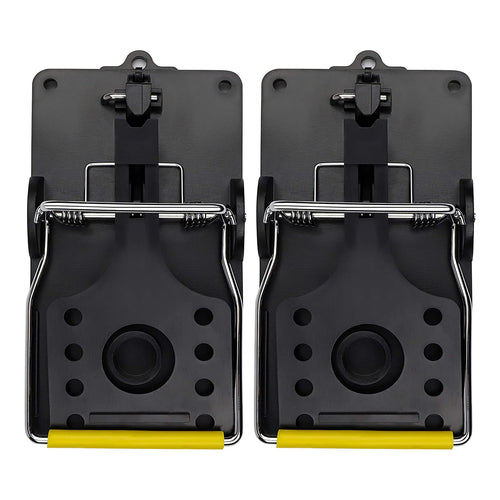
A heavy duty rat trap at right angles to the wall, trigger end facing it, so a rat running along the edge crosses it. What you need for step 4PoisonRatKil Rat Bait Box & Rat PoisonLock and key bait station with 150g of rat and mouse poison grain included. Suitable for all weather, indoors and outdoors.£15.99View the kitRefillsRatKil Bait Blocks 300gAll-weather blocks for damp areas like sheds, garages and gardens. Multi-feed bait that works over several days. Fix onto the rod inside the bait box.£8.99View bait blocksTrapsRatKil Heavy Duty Rat Traps (2 Pack)Large snap traps with a powerful spring and a built-in bait cup. Reusable, wipe-clean and no poison.£10.99View rat traps -
Give them time to get used to it
Rats are wary of new objects and may avoid traps and bait boxes at first. For traps, bait them but don't set the spring until the bait has been eaten, then set them. A small amount of peanut butter works well.
-
Check, top up and remove
Check traps every day and bait stations every few days. Reset traps, top up bait that's been eaten and keep a note of every point. Wear gloves to bag dead rats for your general waste. When bait is no longer being taken, remove all leftover bait.
-
Seal the way in and clear up
Rats can get in through a 15mm gap. Pack gaps around pipes and cables with steel wire wool, fit brush strips to doors, and get broken drains checked, as defective drains are a common way into homes. Then clear the clutter you left in step 3.

Steel wire wool packed into a gap where a pipe enters an outside wall. Rats can get in through a gap of 15mm.

Every way to get rid of rats, compared
| Method | Best for | How it works | Watch out for | RatKil option |
|---|---|---|---|---|
| Poison in a bait station | An established group; gardens, sheds, garages, under floors | Acts over a few days, so the rest of the group keeps feeding instead of becoming bait shy | Bait should be kept in a tamper-resistant station; remove leftovers when done | Bait Box & Poison, Bait Blocks |
| Snap traps | A few rats; lofts, garages, sheds; no-poison homes | Kills instantly; you see each catch | Rats are wary of new things, so leave unset until bait is taken | Heavy Duty Traps |
| Covered trap | Outdoors and gardens with pets | Mechanism enclosed, with 2 entrances | Bulkier; needs a flat spot on a run | Ultra Rat Trap |
| Humane cage trap | A single rat, in no-kill households | Catches the rat alive with an auto-lock door | You then have a live rat to deal with; not practical for a group | Live Cage Trap |
| Repellents | Keeping rats out of lofts, sheds, garages and cars after clearing | Strong peppermint smell rats dislike | Won't clear an established group on their own | Sachets, Spray |
| Rat-proofing | Stopping rats coming back | Wire wool and mesh in gaps rats can't chew through | Do it after the rats are gone, or you may trap them inside | Proofing Kit |
Most people get the best result by combining bait or traps to remove the rats with proofing to stop new ones getting in.
Where are your rats?
Rats in the garden
Cut off bird food, compost scraps and fallen fruit, then put bait stations or covered traps along fences, sheds and decking. Our full guide covers every garden situation: how to get rid of rats in the garden.
Rats in the house or walls
Find how they're getting in, often gaps around pipes, air bricks or a broken drain. Set traps along walls in the rooms with most activity, and seal entry points once the noise stops.
Rats under the floorboards
Use grain sachets on bait trays under the floor where children and pets can't reach, or traps by the access points. Get the drains checked if activity keeps returning.
Rats in the loft
Set traps along the joists and use grain on bait trays where they run. Check where pipes and cables enter and around the eaves. Once they're gone, peppermint sachets help keep the space unattractive.
Rats under decking or a shed
Place a bait box with poison or a covered trap at the edge where you see burrows or runs, not deep underneath. Once clear, block gaps around the base with rodent mesh.
Rats coming from the drains
If rats keep appearing inside with no obvious gap, a broken or disused drain is a likely cause. A drainage contractor can survey the drains and repair or block the defect. Traps and bait clear the rats already inside.
Rats in the garage or shed
Enclosed spaces are where bait and traps work well, because rats feel safe feeding there. Store bird seed and pet food in sealed tins and fit a brush strip under the door.
What's the best way to get rid of rats?
Our top 5 picks, ranked by how well they fit most rat problems. Most people get the best result from pick 1, with pick 2 alongside and pick 4 to stop rats coming back.
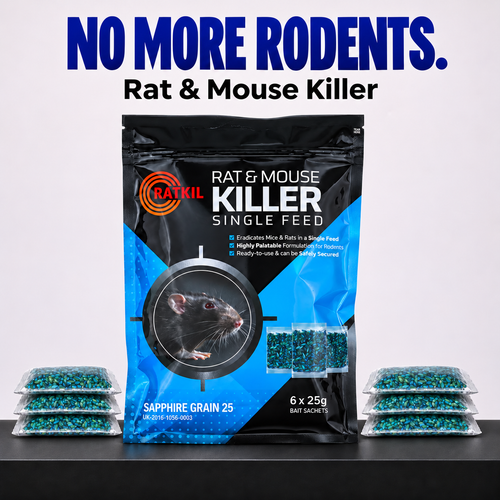
A lock and key bait station with 150g of poison grain included, so you have the bait and the station in one. Suitable for all weather, with space inside for a large rat trap if you'd rather trap.
Powerful spring, built-in bait cup (peanut butter works best), reusable and wipe-clean, for indoor and outdoor use.
All-weather blocks that hold up in damp areas like sheds, garages and gardens, and fix onto the rod inside the station.
Stainless steel wire wool, heavy duty shears and gloves for filling gaps, holes and cracks around pipes and walls.
Lasts 60-90 days. Won't clear an established group on its own.
Also useful: the covered RatKil Ultra Rat Trap (£15.99) for gardens with pets, extra Lockable Bait Boxes (£8.99, no bait included) for more bait points, Bait Trays (£6.49) for lofts and under floors, and gloves.
Always read the label before use. Browse all rat poison, rat traps, bait stations and rodent proofing.
More rat and rodent guides
Questions people ask
What's the fastest way to get rid of rats?
Traps can catch a rat as soon as it starts taking the bait. For a group, bait in a lockable bait station reaches the rats you never see, and it acts over a few days so the rest of the group keeps feeding.
Does seeing one rat mean there are more?
Not always. Rats travel a long way looking for food, so one seen once may be passing through. If you see rats often, or find fresh droppings and burrows, there is likely a group nearby.
Will rats go away on their own?
Rarely, if they have food, water and shelter. Rats breed rapidly, so a small problem grows if it's left.
Why won't rats go near my trap or bait box?
Rats are wary of new objects and often avoid them at first. Leave traps baited but unset until the bait is taken, keep bait boxes in place on their runs, and give them a few days.
How do rats get into the house?
Through gaps of 15mm or more around pipes and cables, under doors, through damaged air bricks and vents, and through broken or disused drains.
Are rats dangerous?
Rats can carry leptospirosis (Weil's disease), which spreads through the urine of infected animals. The NHS says it is rare in the UK. Wear gloves when handling traps, bait or droppings and wash your hands afterwards.
What smell do rats hate?
Peppermint is the most widely used scent deterrent. It works best in enclosed spaces like lofts, sheds and garages, to keep rats away after they're cleared, not to clear an existing group.
When should I call a pest controller?
If activity doesn't drop after treatment, rats are coming in from the drains, or the problem is in a business or a property with many people affected. The British Pest Control Association lists qualified local companies.
Not sure what you need?
Call our UK team on 01484 515 600, or browse the full range.