

Rat guide · Garden
How to Get Rid of Rats in the Garden
To get rid of rats in the garden, cut off their food, then set rat traps or place poison bait in a lockable bait station along the walls, fences and sheds where they run. Check every few days, remove dead rats and leftover bait, then clear clutter and block gaps so they don't come back.
Updated November 2026 · 10 min read

On this page
How do I know I have rats in the garden?
Rats are mostly active at night, so you are more likely to see the signs than the rat. Look for:
Burrows
Holes around 5-7cm wide with a smooth, shiny entrance, often under sheds, decking, compost bins or along fence lines. A smooth entrance means the burrow is in use.
Runs
Flattened paths through grass or along the base of walls and fences, used night after night.
Droppings
Dark, pellet-shaped droppings near food sources such as bird feeders and compost.
Gnawing
Chewed wood, plastic compost bins, shed doors or crops.
Disturbed food
Bird seed vanishing overnight, holes in the compost, or damaged fruit and veg.
What attracts rats to the garden?
Rats stay where they find food, water and shelter. Take away one of these and the garden becomes far less attractive. The most common draws, according to UK council advice, are:
- Wild bird food, especially seed spilled on the ground or left out overnight
- Compost heaps and bins, particularly those with cooked food or kitchen scraps
- Decking, sheds and outbuildings that give dry, hidden cover
- Fallen fruit and berries
- Clutter such as wood piles, old pots and overgrown corners
- Pet food, chicken feed and uncovered rubbish
How to get rid of rats in the garden: 7 steps
-
Find where they are running
Walk the garden in daylight and note burrows, runs and droppings. Rats move along edges, so focus on fence lines, walls, the back of the shed and under decking. These are your trap and bait points.

A flattened rat run in the grass along a fence line. Paths like this show exactly where to place traps and bait stations. -
Cut off their food first
Stop putting out bird food until the rats are gone, pick up fallen fruit and stop adding food waste to the compost. With less food around, rats are much more likely to take your bait or trap.
-
Leave their cover alone for now
It is tempting to clear the wood pile or rip up the decking straight away, but the Campaign for Responsible Rodenticide Use (CRRU) advises against clearing a site before treatment because it disturbs the rats and makes them less likely to take bait. Clear up once the treatment is finished.
-
Set traps or bait stations along the runs
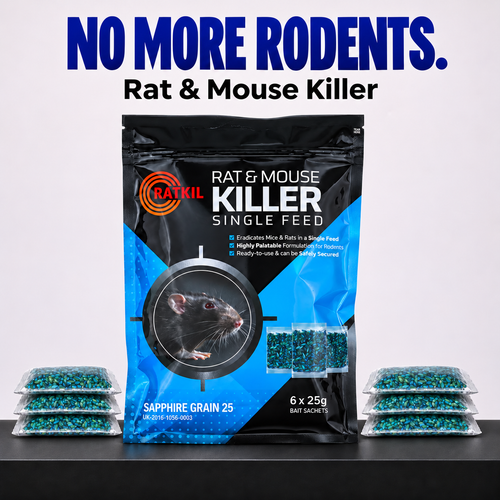
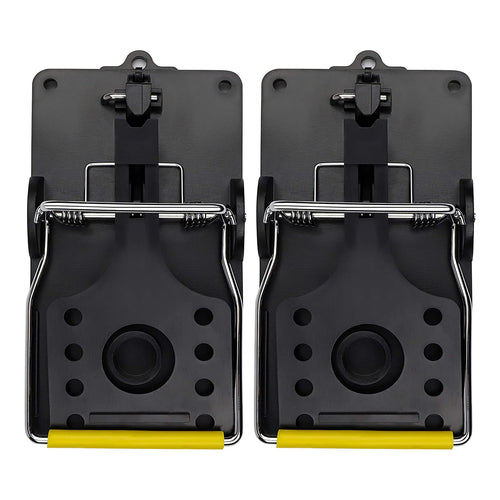
Place them flush against walls and fences where you found activity. Set snap traps at right angles to the wall with the trigger end facing it, so a rat running along the edge goes straight over it. If you use poison, bait should be placed in a tamper-resistant bait station, fixed in place near the activity. The simplest start is a lockable bait box that comes with rat poison, so you have both in one. For refills, all-weather bait blocks suit gardens because they hold up in damp weather and fix onto the rod inside the station.

A heavy duty rat trap set flush against a wall, at right angles, with the trigger end facing the wall. Rats running along the edge cross the trigger. What you need for step 4TrapsRatKil Heavy Duty Rat Traps (2 Pack)Large snap traps with a powerful spring and a built-in bait cup. Reusable, wipe-clean and no poison.£10.99View rat trapsOpen gardensRatKil Ultra Rat TrapExtra large, built for outdoor use, with a covered design so it can't be set off by the wind or knocked by accident.£15.99View the Ultra trapPoisonRatKil Rat Bait Box & Rat PoisonLock and key bait station with 150g of rat and mouse poison grain included, ready to place. Suitable for all weather, indoors and outdoors.£15.99View the kitRefillsRatKil Rat & Mouse Poison Bait Blocks 300gAll-weather blocks that hold up in damp areas like sheds, garages and gardens. Multi-feed bait that works over several days, so the whole group keeps feeding. Fix onto the rod inside the bait box.£8.99View bait blocks -
Check every few days
Look at traps and bait stations regularly. Reset traps, top up bait that has been eaten and keep a note of where each point is so you don't miss one.

A locked bait station placed against the side of a shed, where rats were found running. The station keeps bait secure and away from pets. 
Checking a bait station with gloves on. Regular checks show whether bait is being taken and when the rats have gone. -
Remove dead rats and leftover bait
Wear gloves, bag any dead rats and put them in your general waste bin. When activity stops and bait is no longer being taken, remove all remaining bait so it isn't left down.
-
Clear up and rat-proof
Now remove clutter, move the compost bin away from fences, block gaps under sheds and decking with a rodent proofing kit, and only bring back the bird feeder once you have a catch tray and a routine for clearing spilled seed.

What to do in your situation
Rats under decking
Decking gives rats dry, hidden cover. Place a bait box with poison or covered trap at the edge of the decking where you see runs or a burrow, not deep underneath. Once activity stops, close gaps around the base with rodent-proofing wire wool.
Rats in the compost bin
Stop adding food scraps while rats are active and only compost garden and uncooked vegetable waste. Turn the compost regularly, stand the bin on a hard surface or wire mesh, and keep it away from fences and sheds. Set traps or a bait box with poison along the route to the bin.
Rats under the bird feeder
Stop feeding the birds until the rats are gone. When you restart, use a hanging feeder with a catch tray, put out only what the birds clear in a day, feed earlier in the day and sweep up spilled seed before dark.
Rats in the shed or garage
Enclosed spaces are where traps and bait work fastest, because rats feel safe feeding there. Place traps or a bait box with poison along the inside walls. Once they are gone, peppermint repellent sachets can help keep the space less attractive to new rats.
Pets, chickens or hedgehogs in the garden
Use a lockable bait box to keep bait secure and away from pets, and fix blocks onto the rod so they can't be carried out. A covered trap such as the RatKil Ultra is a better fit than an open snap trap where pets roam. Store chicken feed in sealed containers.
Rats coming from next door
If rats are crossing from a neighbour's garden, focus traps and bait along the shared fence line where they enter. Talk to your neighbour, as treating only one side often means rats keep coming. Your local council can also give advice on rats.
One rat or a whole group?
One rat seen once may be passing through: traps along the fence line are usually enough. Fresh burrows, droppings in several places or rats seen in daylight point to an established group. For that, poison in a lockable bait box along with traps clears them faster than traps alone.
Traps vs poison vs repellents: which works best outside?
| Method | Best for | How it works | Watch out for | RatKil option |
|---|---|---|---|---|
| Snap traps | One rat or a small number; gardens with pets (covered traps) | Kills instantly when the trigger is touched. You see each catch. | Needs checking and resetting. Place out of reach of pets and other animals. | Heavy Duty Traps, Ultra |
| Poison bait in a bait station | An established group around sheds, outbuildings and the house | Rats feed from the station and the bait acts over a few days, so the rest of the group keeps feeding. | Bait should be kept in a tamper-resistant station. Remove leftover bait when activity stops. | Bait Box & Poison, Bait Blocks |
| Humane cage trap | A single rat, if you don't want to kill it | Catches the rat alive with a sensitive trigger and auto-lock door. | You then have a live rat to deal with. Not a practical fit for a group. | Live Cage Trap |
| Peppermint repellents | Keeping rats out of sheds, garages and enclosed spaces after treatment | Strong smell rats dislike, used along entry points. | Works best in enclosed areas. Won't clear an established group on its own. | Sachets, Spray |
| Rodent proofing | Stopping rats getting back under sheds, decking and into buildings | Steel wool and mesh fill gaps rats can't chew through. | Do it after the rats are gone, or you may trap them inside. | Proofing Kit |
Most gardens need a combination: food removed, traps or bait along the runs, then proofing and repellents to stop rats coming back.
What's the best product for rats in the garden?
Our top 5 picks for clearing rats from a garden, ranked by how well they fit the job. Most gardens get the best result from pick 1, with pick 2 as the refill and a trap from 3 or 4 alongside.
A lock and key bait station with 150g of poison grain included, so you have the bait and the station in one. Suitable for all weather, with space inside for a large rat trap if you'd rather trap.
All-weather blocks that hold up in damp areas like sheds, garages and gardens, and fix onto the rod inside the station.
Extra large, built for outdoor use, with a covered design so it can't be set off by the wind or knocked by accident.
Powerful spring, built-in bait cup (peanut butter works best), reusable and no poison.
Lasts 60-90 days. Won't clear an established group on its own.
Also useful: extra RatKil Lockable Bait Boxes (£8.99, no bait included) if you need more bait points, the RatKil Rodent Proofing Kit (£19.99) for blocking gaps under sheds and decking afterwards, and gloves for handling traps, bait and dead rats.
Always read the label before use. Browse the full ranges: rat traps, rat poison, bait stations, repellents and rodent proofing.
Questions people ask
Will rats leave the garden on their own?
Rarely, if there is still food and shelter. Removing bird food, compost scraps and fallen fruit makes the garden less attractive, but an established group usually needs traps or bait in a bait box to clear it.
Should I stop feeding the birds if I have rats?
Yes, for now. UK councils advise stopping bird feeding while rats are active. Once they are gone, use a hanging feeder with a catch tray and clear spilled seed every evening.
Where should I put rat traps in the garden?
Along the routes rats already use: tight against fences, walls and the sides of sheds, near burrows and close to food sources such as compost bins. Set them at right angles to the wall with the trigger facing it.
Is it safe to use rat poison in the garden with pets?
Bait should be placed in a tamper-resistant bait station so pets and other animals can't reach it. Fix blocks onto the rod inside the station, check it regularly and remove leftover bait once the rats have gone.
What smell keeps rats away?
Peppermint is the most widely used scent-based deterrent. It works best in enclosed spaces such as sheds and garages, and for keeping rats away after treatment, rather than clearing an existing group.
Can rats in the garden make you ill?
Rats can carry leptospirosis (Weil's disease), which spreads through the urine of infected animals. The NHS says it is rare in the UK. Wear gloves when gardening near rat activity and wash your hands afterwards.
How long does it take to get rid of rats in the garden?
Traps can catch a rat on the first night. Bait in a station acts over a few days, so keep checking every few days until no bait is being taken and there are no fresh droppings, runs or burrows.
More pest control guides
Not sure what you need?
Call our UK team on 01484 515 600, or browse the full range.